
Watch: Stress in the Brain — Part 1
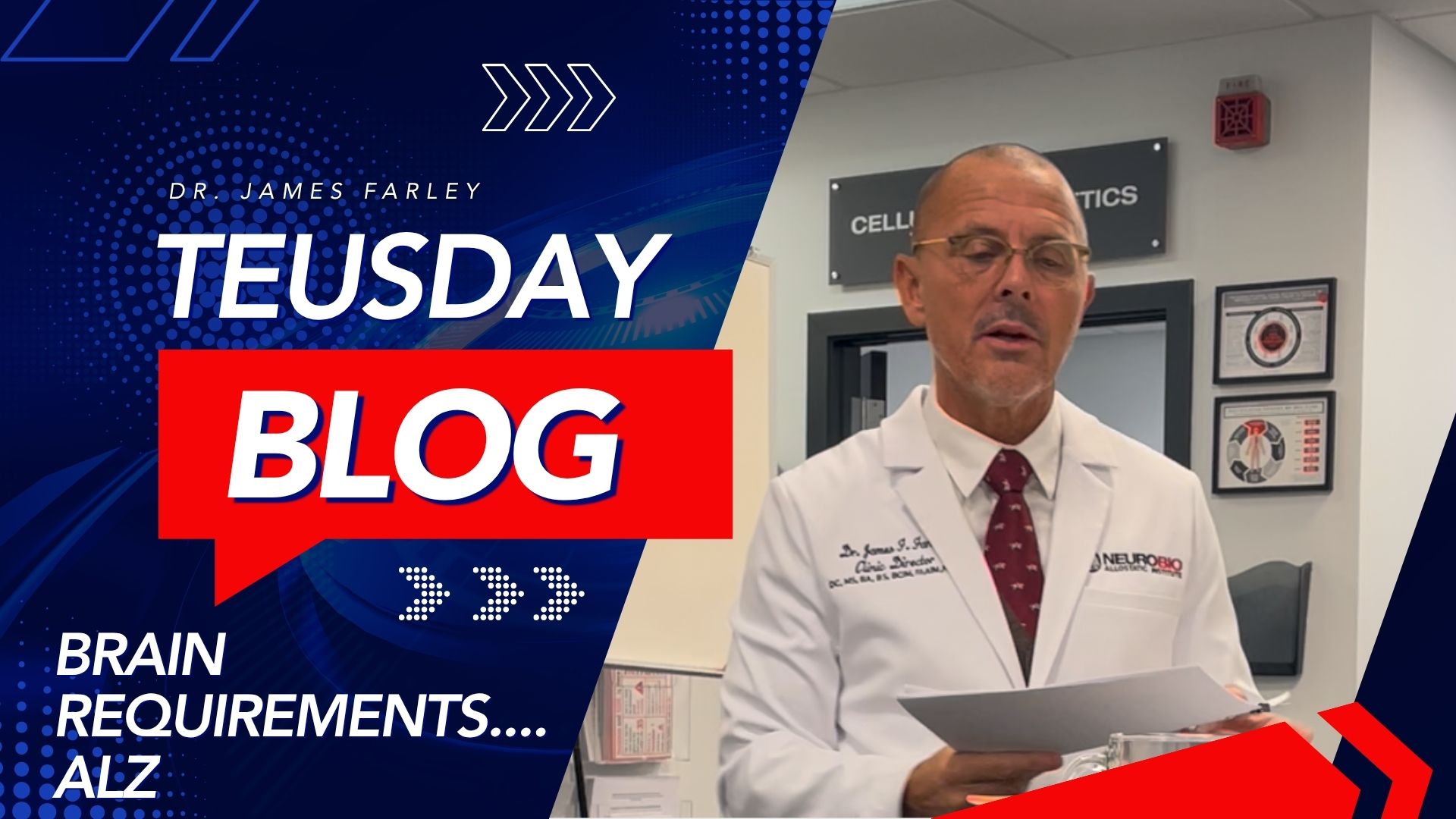
In this educational video, Dr. James Farley takes a closer look at the relationship between sensory input, brain processing, nervous system output, and the body’s stress response.
Watch the full video above to learn more about Nervous System Stress Overload and why understanding how the nervous system functions may provide a different perspective on your health.
Stress is often thought of as simply feeling overwhelmed, anxious, or mentally exhausted. But stress can come from many different sources. Physical injuries, chemical stressors, and mental-emotional stress can all influence how the nervous system receives, processes, and responds to information.
In this Neuro-Biomedicine educational video, Dr. James Farley explains a concept we refer to as Nervous System Stress Overload and why understanding the nervous system may help us look beyond symptoms alone.
Three Types of Stress
The body can encounter stress in several different forms:
- Physical stress — including injuries, repetitive strain, and other physical demands placed on the body.
- Chemical stress — factors in our internal or external environment that can place additional demands on normal physiological processes.
- Mental-emotional stress — the psychological and emotional pressures we experience throughout everyday life.
Rather than operating independently, these stressors can overlap. Dr. Farley discusses how repeated or prolonged stress may influence the way the nervous system functions and responds.
Your Nervous System Is Constantly Receiving Information
Your brain doesn’t operate separately from the rest of your body. The nervous system is continuously receiving information from both your internal and external environments.
In the video, Dr. Farley discusses seven important sources of sensory input:
Skin • Muscles • Joints • Eyes • Ears • Smell • Taste
These receptors provide the nervous system with information. The brain then processes that information and produces an appropriate response.
One way to think about this process is:
INPUT → PROCESSING → OUTPUT
When the information coming into the nervous system is appropriate and the brain processes it effectively, the resulting output can support normal function throughout the body.
This is why Neuro-Biomedicine looks not only at the output—or the symptoms someone experiences—but also at the processes and inputs that may be influencing that output.
Fight-or-Flight vs. Rest-and-Relaxation
The autonomic nervous system plays an important role in regulating processes that happen without conscious thought.
Two important components are the:
Sympathetic nervous system — commonly associated with the body’s fight-or-flight response.
Parasympathetic nervous system — commonly associated with rest, recovery, and relaxation.
Both are necessary. The goal isn’t to eliminate the stress response. Your body needs the ability to respond appropriately when a challenge or threat occurs.
The concern is what happens when the body experiences repeated stress and has difficulty returning to a more restorative state.
Dr. Farley describes this prolonged imbalance as Nervous System Stress Overload.
Why Look Beyond the Symptom?
Symptoms are important. They can alert us that something deserves attention. However, the name given to a collection of symptoms doesn’t necessarily explain every biological process contributing to them.
That’s why one of the questions emphasized in Neuro-Biomedicine is:
What factors may be contributing to the loss of normal function?
Instead of looking only at where a symptom appears, Dr. Farley encourages patients to think about the larger systems involved—including the nervous system, stress response, cellular function, circulation, hormones, and other physiological processes.
The objective is to develop a more complete picture of the individual rather than viewing one symptom in isolation.
Continue Your Education
The symptoms you experience are only one part of the information available about your health. Neuro-Biomedicine education explores the brain, nervous system, stress response, metabolic health, nutrition, circulation, cellular function, and other factors that may influence how the body functions.
Explore more Neuro-Biomedicine educational articles and videos to continue learning.