
Parkinson's and Movement Disorder Care in New Jersey
A Parkinson's diagnosis tells you what is happening. It does not tell you why it is happening to you, or which of your own root functional causes are speeding the process along. That second question is what this office evaluates, and it is where care begins.
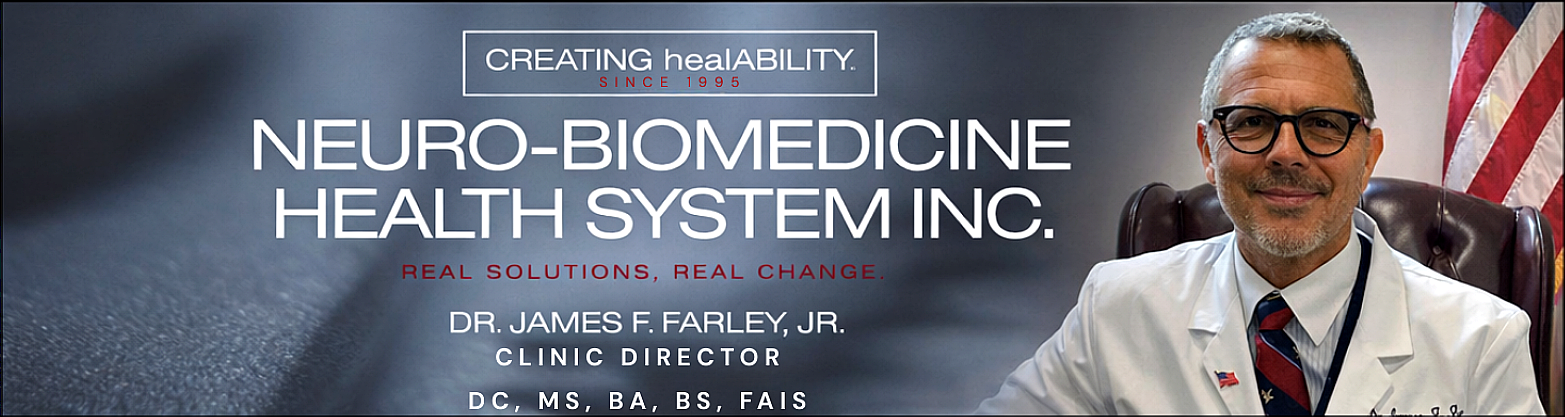
Dr. James Farley, DC, MS, BA, BS, FAIS has practiced in Bridgewater, New Jersey for more than 30 years, specializing in neuro biomedicine and functional neurology applications. His approach, CREATING healABILITY, works alongside the physician managing your diagnosis and focuses on function, stability and daily capacity. Patients with Parkinson's, Parkinsonism, MSA, PSP, essential tremor and other movement disorders come to the Bridgewater office from across New Jersey.
- 30+ years in practice
- DC, MS, BA, BS, FAIS
- Works alongside your treating physician
- CREATING healABILITY
Watch: What healABILITY Means for Parkinson's
healABILITY is the preservation of health and wellness through the promotion of well-being, the prevention of disease, and the support of the body's inherent recuperative abilities. In this video Dr. Farley explains how that applies to Parkinson's and movement disorders.
Understanding Parkinson's at the Root Level
Parkinson's disease and the related movement disorders are conditions of progressive neurodegeneration, most visibly affecting the basal ganglia, the deep brain region that coordinates smooth movement. People are being diagnosed younger, some in their 30s and 40s, and while many assume the cause is genetic, research indicates that only a small fraction of cases are driven primarily by genetics. For everyone else, the disease course is shaped by what is happening in that person's own nervous system, biochemistry and inflammatory environment.
The early signs usually arrive years before the diagnosis: a subtle tremor, handwriting that gets smaller, a fading sense of smell, trouble sleeping, stiffness in walking or movement, constipation, mood changes, a softer voice or a less expressive face. Many patients can trace soft signs back a decade or more before anyone connected them.
The real question is often bigger than the label. Have you been told it is Parkinsonian syndrome, multiple system atrophy, progressive supranuclear palsy, essential tremor or cerebellar ataxia? Either way, the work is the same: find out why your brain is degenerating so there is a plan aimed at slowing the process and protecting the function you have.
What Standard Parkinson's Care Gets Right, and What It Misses
Dopamine replacement medication is an important tool. For many patients it meaningfully improves tremor, stiffness and slowness, and nothing in this office replaces it. But these medications resupply a missing signal. They do not ask why the brain stopped producing dopamine in the first place, and they do not slow the underlying neurodegeneration. That is why symptoms commonly progress even with well-managed medication, and why doses tend to climb over time.
Standard care also tends to be reactive, adjusting medication as symptoms advance rather than evaluating and addressing the factors that drive the advance. A more complete evaluation looks at:
- Neurological activation: whether the brain is receiving the physical stimulation it needs from the body
- Oxygen delivery and anemia, which quietly starve brain tissue of fuel
- Blood sugar stability, a factor in nearly every chronic neurodegenerative process
- Systemic inflammation and the gut-immune axis, since sustained inflammation damages blood-rich brain regions like the basal ganglia
- Liver detoxification capacity, essential fatty acid status, glutathione levels and methylation, the biochemical systems the brain depends on to protect and repair itself
None of this replaces medication for patients who need it. It builds a far more complete picture of what is driving your condition and what can still be influenced.
The 8 Hidden Root Functional Causes We Evaluate
In this office we evaluate eight hidden root functional areas connected to trans-neuronal degeneration. Each one can be measured, and measuring them is what turns a label into a root functional cause diagnosis, the starting point for a plan built around you rather than a one-size-fits-all protocol.
1. Lack of activation
The brain needs constant physical stimulation from the body to stay healthy. Most Parkinson's patients report this has never been checked.
2. Low oxygen or anemia
Mild to significant anemia and poor oxygen delivery are common findings that often go untested and unaddressed in movement disorder patients.
3. Unstable blood sugar
Glucose, HbA1c, LDH, BUN and triglycerides, read together with a detailed history, reveal blood sugar patterns that undermine brain function.
4. Liver detoxification issues
The liver clears the vast majority of the toxins the brain would otherwise be exposed to. A sluggish detox system needs to be addressed.
5. Essential fatty acids and cholesterol
A large share of the brain is built from cholesterol and good fats. Fat status, and any cholesterol-lowering medication, belongs in the evaluation.
6. Low glutathione and SOD
These are the brain's own antioxidant defense systems. When they run low, brain cells lose their main protection against further degeneration.
7. GI and immune problems
The gut houses most of the immune system, with or without digestive symptoms. A sustained inflammatory response is critical to identify and correct.
8. Poor methylation
Methylation supplies the CH3 groups the brain needs for energy, repair and neurotransmitter production. Without them, recovery stalls.
Three simple steps: proper testing, a proper root functional cause diagnosis, and a treatment plan specific to you, not a protocol.
Speak with Our Office About the Qualification Process
Schedule a Discovery Call with our Qualification Coordinator to discuss whether your case may qualify for a Consultation and Brief Analysis with Dr. Farley.
How Care Works at This Office
The first step is to direct the patient to attend a webinar or seminar on Parkinson's or Parkinsonism, or to receive an educational report, to better understand our unique, science-based approach to optimizing health.
The next step is a Discovery Call with our Qualification Coordinator. During this call, we gather information about the patient's health and determine whether they qualify to come into the office for a Consultation and Brief Analysis with Dr. Farley. The purpose of this consultation is to determine whether the patient qualifies to proceed with comprehensive in-office testing.
If the case qualifies, the next step is comprehensive, in-office, science-based testing. We then carefully assess the patient's data and test results to develop an individualized health promotion plan tailored specifically to their needs and goals.
Parkinson's and Movement Disorder Client Testimonials
These are real clients of this office describing their own experience in their own words. Individual results vary from person to person, and no outcome is typical or guaranteed.
Ralph M.
*Individual results may vary
Wanda M., Follow Up
*Individual results may vary
Janice
*Individual results may vary
Betty, PSP
*Individual results may vary
Donna A.
*Individual results may vary
Donna A.
*Individual results may vary
Client Testimonial
*Individual results may vary
Susan D.
*Individual results may vary
Cassandra S.
*Individual results may vary
Cassandra S.
*Individual results may vary
Carolyn N.
*Individual results may vary
Mr. Kelley
*Individual results may vary
Kathy
*Individual results may vary
Dale G., Follow Up
*Individual results may vary
Dale G.
*Individual results may vary
Mark B.
*Individual results may vary
Robert & Shirley R.
*Individual results may vary
Ron P.
*Individual results may vary
Beverly
*Individual results may vary
Beverly, Follow Up
*Individual results may vary
Beverly
*Individual results may vary
Wanda, Parkinson's
*Individual results may vary
Danny F.
*Individual results may vary
Daniel F., Follow Up
*Individual results may vary
Daniel F., Follow Up
*Individual results may vary
Albert
*Individual results may vary
Lennox
*Individual results may vary
Lennox
*Individual results may vary
Vincent, Parkinson's
*Individual results may vary
Giovanni, Parkinson's
*Individual results may vary
Frank
*Individual results may vary
Kevin B.
*Individual results may vary
Mirta
*Individual results may vary
Nicholas M., Follow Up
*Individual results may vary
Nicholas M., Follow Up
*Individual results may vary
Nicholas M., Parkinson's
*Individual results may vary
What Medical Colleagues Say
Dr. Naveed Ashfaq, MD, FRCS, President of Sterling Clinical Laboratory: "Dr. Farley has worked long and hard at his knowledge and the precision he applies to each and every patient. A new patient's evaluation and testing is much more complete than most doctors. His ability to explain a complex problem in an easily understandable concept, which is healABILITY, is fantastic for patients in helping them understand and get well."
Dr. Abdul Qadir, MD, Clinlabs Laboratory, working with this office since 2012: "Your panel is very extensive and covers almost all the detail of chemistry and complete hematology, vitamins and minerals. I have not seen such detailed testing. I would highly recommend the Neuro-Biomedicine program. It is unique and scientific."
Related Care at This Practice
Functional neurology applications in Bridgewater
How the evaluation works, what it includes and what to expect from a first visit.
Multiple sclerosis
Fatigue, coordination, vision changes and the immune side of a demyelinating condition.
Dementia, Alzheimer's and neurodegenerative disease
Memory change, executive function and practical support for the family managing it.
Chronic back, neck and disc pain
Non-surgical, non-drug care for pain that has a nerve component.
Visiting the Bridgewater Office
Location
The Neuro Biomedicine Health System
720 US-202 #206Building 2, Level 1
Bridgewater, NJ 08807
Phone
(862) 222-2460Patients travel from
Bridgewater, Somerville, Basking Ridge, Bedminster, Branchburg, Hillsborough, Warren and Morristown, with Parkinson's and movement disorder patients coming from Somerset, Morris, Union and Bergen counties and across New Jersey.
Common Questions About Parkinson's Care
Can this approach cure Parkinson's disease?
No. There is currently no cure for Parkinson's, and no honest practice would claim one. The goal here is to identify the root functional causes contributing to your neurodegeneration, address the ones that can be influenced, and support your neurological function so that your disease course is as stable as possible and your quality of life is as high as possible.
Do I have to stop my Parkinson's medication to work with this office?
No. This office works alongside your existing care, including dopamine replacement therapy. Never stop or change a prescription medication except under the direction of the physician who prescribed it. The approach here is complementary, not a replacement.
What are the early warning signs of Parkinson's?
Common early signs include a subtle tremor, smaller handwriting, a reduced sense of smell, trouble sleeping, stiffness in movement or walking, constipation, mood changes, a softer voice and a less expressive face. These can appear years before diagnosis, which is why early evaluation matters.
I was told it is Parkinsonism, MSA, PSP or essential tremor. Does this apply to me?
Yes. The office works with the full range of movement disorders, including Parkinsonian syndromes, multiple system atrophy, progressive supranuclear palsy, essential tremor, dystonia and cerebellar ataxia. The evaluation is built around your neurological findings, not the name of the label.
What is the process for becoming a patient in the office?
The first step is to attend a Parkinson's webinar or seminar, or review one of our educational reports, to learn more about our science-based approach to optimizing health.
Next, you will have a Discovery Call with our Qualification Coordinator to determine whether your case may qualify for a Consultation and Brief Analysis with Dr. Farley.
If your case qualifies, you may then proceed with comprehensive, in-office testing. Dr. Farley will carefully evaluate your test results and health data to determine the appropriate individualized health promotion plan for you.
Is Dr. Farley a neurologist?
No. Dr. Farley is a Doctor of Chiropractic (DC) with post-graduate training in functional neurology and neuro biomedicine. He is not a medical neurologist (MD or DO), does not prescribe medication, and does not replace the physician managing your diagnosis. Many patients see him alongside their treating physician.
Does Your Case Qualify?
Schedule a Discovery Call today to find out if your case may qualify.