 If you’ve been living with sciatic pain, you already know how disabling it can be. The shooting pain down your leg, the numbness, the burning sensation that makes sitting through a meeting or picking up your kids feel impossible. And if you’ve already been through the standard treatment cycle — pain medications, cortisone injections, maybe even surgery — and you’re still hurting, you are not alone.
At NeuroBio Medicine Health in Bridgewater, NJ, we see patients like you every week. People who’ve been told to just manage the pain, without anyone ever asking why the nerve is irritated in the first place. That’s exactly where our approach is different — and why so many patients who come to us after years of failed treatment finally start to get their lives back.
What Is Sciatica, Really?
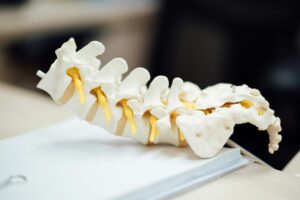
Sciatica is not a diagnosis — it’s a symptom. It describes pain, tingling, numbness, or weakness that radiates along the sciatic nerve, which runs from your lower back through your hips and buttocks and down each leg. The sciatic nerve is the longest nerve in the body, and when it becomes compressed or irritated — typically somewhere between the lumbar spine (L4–S1) and the piriformis muscle in the hip — it sends pain signals that can travel all the way to your foot.
Common Causes of Sciatic Nerve Pain
-
- Herniated or bulging discs — the most common cause, where disc material presses directly on a nerve root
- Spinal stenosis — a narrowing of the spinal canal that puts pressure on the nerve
- Piriformis syndrome — chronic tightening of the piriformis muscle in the buttock that compresses the sciatic nerve
- Degenerative disc disease — age-related disc breakdown that reduces cushioning between vertebrae
- Spondylolisthesis — a condition where one vertebra slips forward over another, pinching nearby nerve roots
In every case, the nerve is being irritated for a specific reason. Finding and correcting that reason — not just suppressing the pain signal — is the foundation of lasting relief.
Why Standard Sciatica Treatment Often Falls Short
Conventional medicine typically addresses sciatica by targeting pain first. That means anti-inflammatory medications, muscle relaxants, epidural steroid injections, or when nothing else works, surgical intervention. For some patients these methods provide temporary relief. For many, they don’t address the underlying structural or neurological problem driving the pain.
Here’s what standard care often misses:
- The neurological component — how the brain and nervous system are processing and amplifying pain signals
- The biomechanical picture — why the disc herniated or why the piriformis is in chronic spasm
- The whole-body context — inflammation, blood sugar instability, stress chemistry, and lifestyle factors that keep the nerve environment inflamed
When these factors go unaddressed, pain returns. That’s not a failure of the patient — it’s a gap in the treatment approach.
A Functional Neurology Approach to Sciatica Treatment in NJ
Functional neurology is a clinical discipline that examines the nervous system as a whole, looking for areas of dysfunction and using non-invasive treatments to rehabilitate the neurological pathways driving your symptoms. Rather than managing what you feel, the goal is to identify and correct the root-level problem that is generating those symptoms in the first place.
At our sciatica treatment practice in NJ, every patient begins with a comprehensive neurological and structural evaluation. We assess spinal alignment, nerve conduction, disc integrity, muscular imbalances, and the broader neurological state of your system. This gives us a complete picture of why your sciatic nerve is being irritated — and what it will actually take to correct it.
The treatment plan is built around that specific picture, not a generic protocol. This is at the heart of the healABILITY approach: creating the conditions inside your body for genuine, lasting recovery rather than symptom management.
Spinal Decompression for Sciatica
One of the most effective tools we use for disc-related sciatica is spinal decompression therapy. This is a non-surgical, non-invasive treatment that gently stretches the spine, creating negative pressure inside the disc space. That negative pressure pulls herniated disc material back toward center while drawing nutrient-rich fluid into the disc — accelerating the body’s own healing process without injections or surgery.
Spinal decompression is particularly effective for patients with herniated discs, bulging discs, degenerative disc disease, and sciatica that hasn’t responded to standard physical therapy or chiropractic care.
Addressing the Neurological Driver of Chronic Sciatic Pain
Beyond structural correction, we assess what the nervous system itself is doing. Chronic sciatic pain frequently involves neurological sensitization — where the nervous system has been in a state of alarm for so long that it amplifies pain signals even when the structural problem is beginning to heal. Functional neurology treatments work directly on this by rehabilitating cerebellar and brainstem pathways to downregulate the pain response at the neurological level.
This is why two patients with identical disc herniations can have completely different pain experiences — and why treating the spine alone isn’t always enough.
What Sciatica Treatment at Our NJ Practice Looks Like
For most patients, care begins with a detailed intake and neurological examination. Dr. James Farley reviews your full history, identifies the structural and neurological contributing factors, and designs a personalized treatment protocol. There is no one-size-fits-all program here.
Depending on the evaluation findings, treatment may include a combination of:
- Spinal decompression therapy targeting the affected disc level
- Tonal chiropractic adjustments to restore proper spinal mechanics
- Neurological rehabilitation exercises to address the pain sensitization component
- TECAR therapy to reduce inflammation and accelerate tissue healing
- Dietary and lifestyle guidance to address systemic inflammation that perpetuates nerve irritation
Many patients begin experiencing noticeable improvement within the first few weeks. The full program typically runs 8–16 weeks depending on the severity and how long the condition has been present.
When to Stop Waiting and Seek Real Help
Sciatica tends to worsen over time when the underlying cause goes unaddressed. Prolonged nerve compression can lead to progressive weakness, loss of sensation, and in severe cases, permanent neurological damage. If you’ve been managing sciatic pain for more than a few weeks without meaningful improvement — or if the pain is interfering with your daily life — it’s time to look deeper.
Our team at NeuroBio Medicine Health specializes in back, neck, and disc pain that doesn’t respond to conventional care. We work with patients from throughout New Jersey who have often tried everything else before finding us. If you’re ready to identify and correct the root cause of your sciatica rather than just manage it, we’d like to help.
Contact our Bridgewater, NJ office to schedule a consultation and find out whether you’re a candidate for our functional neurology and spinal decompression program.
Frequently Asked Questions About Sciatica Treatment in NJ
What is the most effective treatment for sciatica?
The most effective treatment depends on the underlying cause. For disc-related sciatica, spinal decompression combined with a neurological rehabilitation program often produces the best long-term outcomes. A thorough evaluation is the essential first step before any treatment is started.
How long does sciatica take to heal?
Healing time varies based on the severity of nerve compression and how long the condition has been present. Many patients begin experiencing significant relief within 4–8 weeks of a structured treatment program. Chronic cases may take longer but can still achieve meaningful, lasting improvement.
Is spinal decompression safe for sciatica?
Yes. Spinal decompression is a non-surgical, non-invasive treatment with a strong safety profile. It is particularly appropriate for patients who want to avoid injections or surgery and who have not responded to standard physical therapy or chiropractic care.
Can sciatica return after treatment?
If the root cause is properly identified and corrected — including disc health, spinal alignment, and neurological sensitization — the risk of recurrence is significantly reduced. Lifestyle guidance and maintenance care play an important role in preventing future flare-ups.
What does functional neurology have to do with sciatica?
Functional neurology examines how the nervous system processes and perpetuates pain. In chronic sciatica, the nervous system often becomes sensitized, continuing to amplify pain signals even when the original physical injury has partially healed. Functional neurology techniques address this component directly, which is often the missing piece in patients who don’t improve with physical treatment alone.
Do you accept patients from outside Bridgewater, NJ?
Yes. Our practice serves patients from throughout New Jersey and beyond, including many who have exhausted local treatment options. We regularly see patients who travel specifically because they have not found relief elsewhere.