
Multiple Sclerosis Care in New Jersey
Multiple sclerosis is not a static condition. How it progresses, and how you feel day to day, is influenced by how your nervous system, immune system and metabolism are actually performing. That is what this office evaluates, and that is where care begins.
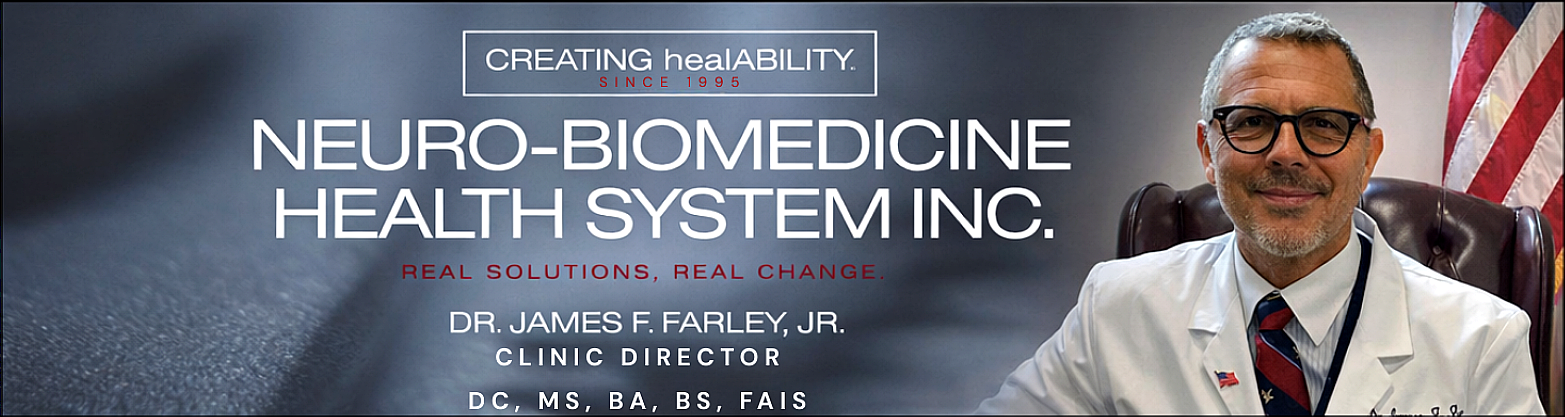
Dr. James Farley, DC, MS, BA, BS, FAIS has practiced in Bridgewater, New Jersey for more than 30 years, specializing in neuro biomedicine and functional neurology applications. His approach, CREATING healABILITY, works alongside the physician managing your MS and focuses on function, fatigue and daily capacity. Patients come to the Bridgewater office from across New Jersey.
- 30+ years in practice
- DC, MS, BA, BS, FAIS
- Works alongside your treating physician
- CREATING healABILITY
Understanding Multiple Sclerosis at the Root Level
Multiple sclerosis is a chronic autoimmune condition in which the immune system mistakenly attacks myelin, the protective sheath around nerve fibers in the brain and spinal cord. As myelin is damaged, the signals that travel through the nervous system are slowed or interrupted. That is what produces the wide range of symptoms associated with MS: fatigue, muscle weakness, coordination problems, vision changes, cognitive fog, numbness and more.
What is less commonly discussed is that the rate of progression, the severity of relapses and the degree of impairment are influenced by factors that go beyond the diagnosis itself. Two patients with the same diagnosis and similar lesion patterns can have very different disease courses. One progresses quickly. The other remains stable for years. The difference often comes down to what is happening in that person's nervous system, immune system and overall biological environment.
That is exactly the kind of question a functional evaluation is built to answer.
What Standard MS Care Gets Right, and What It Misses
Disease-modifying therapies are an important tool. For many patients they reduce the frequency of relapses and slow lesion accumulation. That matters, and nothing in this office replaces them. But these medications work primarily by suppressing certain immune functions. They do not address why the immune system became dysregulated in the first place, and they do not rehabilitate neurological pathways that have already been affected.
Standard care also tends to be reactive, adjusting medication after a relapse rather than building the kind of neurological and systemic resilience that supports stability in the first place. A more complete evaluation looks at:
- The state of the blood-brain barrier and what may be compromising it
- Gut health and the gut-immune axis, which has direct implications for autoimmune regulation
- Mitochondrial function and energy production at the cellular level
- Neurological rehabilitation, training the brain to route signals around underperforming areas
- Inflammatory drivers, including diet, blood sugar, environmental load and stress chemistry
None of this replaces medication for patients who need it. It creates a far more complete picture of what is happening and what can still be influenced.
Talk to the office about an MS evaluation
The front desk can answer what a first visit involves, what it costs and what your insurance covers before you book anything.
Neurological Rehabilitation for MS
One of the most underused strategies in MS care is neurological rehabilitation: targeted exercises and therapies designed to strengthen pathways around areas of damage. The brain has a remarkable capacity for neuroplasticity, the ability to rewire and reorganize itself in response to the right input. By providing specific, calibrated neurological stimulation, rehabilitation works to strengthen underperforming circuits, improve coordination and balance, reduce cognitive fog and support better overall function, even in the presence of existing lesions.
The autoimmune side gets equal attention. MS is fundamentally a condition of immune dysregulation, and restoring the immune system's ability to self-regulate runs through gut rehabilitation, anti-inflammatory nutrition and targeted support. Research increasingly connects the gut microbiome to immune regulation in MS. Restoring gut health is not a cure for MS. It is a meaningful modifier of the environment the disease operates in.
How Care Works at This Office
Care here begins with a functional neurology applications evaluation at the Bridgewater office. It runs longer than a standard appointment because it examines neurological function across multiple systems, reviews immune and inflammatory indicators, considers gut health and looks at what specific factors may be contributing to your individual MS course. The plan that comes out of it is built around your findings, not a generic protocol. For a condition as variable as MS, that precision matters.
Patients who work with Dr. Farley for MS support typically report improvements in energy, cognitive clarity, balance and overall quality of life. The goal is never to overpromise. MS is a serious neurological condition and every case is different. But there is a significant gap between "this is as good as it gets" and what many patients experience with a genuinely thorough evaluation. That gap is where this office works.
Related Care at This Practice
Functional neurology applications in Bridgewater
How the evaluation works, what it includes and what to expect from a first visit.
Parkinson's disease and movement disorders
Tremor, rigidity, gait change, balance loss and the autonomic symptoms that often arrive first.
Dementia, Alzheimer's and neurodegenerative disease
Memory change, executive function and practical support for the family managing it.
Chronic back, neck and disc pain
Non-surgical, non-drug care for pain that has a nerve component.
Visiting the Bridgewater Office
Location
The Neuro Biomedicine Health System
720 US-202 #206Building 2, Level 1
Bridgewater, NJ 08807
Phone
(862) 222-2460Patients travel from
Bridgewater, Somerville, Basking Ridge, Bedminster, Branchburg, Hillsborough, Warren and Morristown, with MS patients coming from Somerset, Morris, Union and Bergen counties and across New Jersey.
Common Questions About MS Care
Can functional neurology applications cure multiple sclerosis?
No. There is currently no cure for MS, and no honest practice would claim one. The goal here is to support your neurological function, reduce inflammatory drivers and build the body's resilience so that your disease course is as stable as possible and your quality of life is as high as possible.
Do I have to stop my MS medication to work with this office?
No. This office works alongside your existing care, including disease-modifying therapies. The approach is complementary, not a replacement for medication that is appropriate for your situation.
What does neurological rehabilitation look like for MS?
Targeted exercises and stimulation protocols designed to strengthen pathways and circuits that have been weakened by demyelination. Programs are individualized based on each patient's neurological examination findings.
How does gut health relate to multiple sclerosis?
Research increasingly shows that the gut microbiome plays a significant role in immune regulation. An imbalance of gut bacteria is commonly found in autoimmune conditions including MS and may contribute to ongoing immune dysregulation. Addressing gut health is one part of reducing the inflammatory environment around the disease.
Is this approach appropriate for all types of MS?
The office works with patients across the spectrum of MS presentations: relapsing-remitting, primary progressive and secondary progressive. The program is always tailored to the individual's current neurological status and goals.
Is Dr. Farley a neurologist?
No. Dr. Farley is a Doctor of Chiropractic (DC) with post-graduate training in functional neurology and neuro biomedicine. He is not a medical neurologist (MD or DO), does not prescribe medication, and does not replace the physician managing your diagnosis. Many patients see him alongside their treating physician.
Request an MS Evaluation
If you are living with MS and feel like you are only managing symptoms rather than actually influencing your condition, call (862) 222-2460 or use the contact form.